
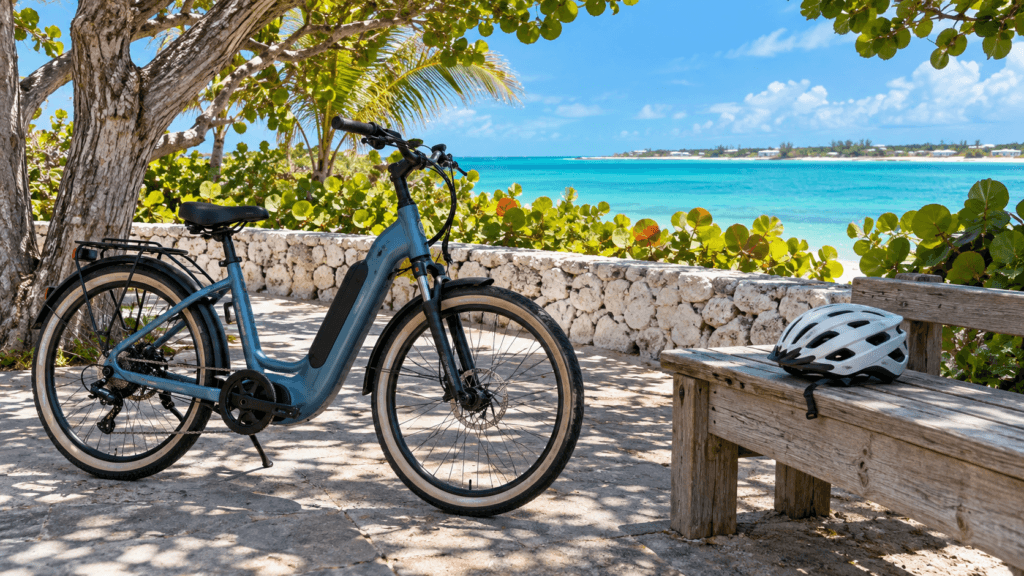
The first few minutes with a rental electric bike should feel unhurried. You may be eager to leave the pickup point and start exploring Providenciales, but this is the best time to ask questions, become familiar with the bicycle, and decide whether the planned outing suits you. A comfortable start is more valuable than an ambitious route. Think of the first fifteen minutes as an orientation, not a deadline that every rider has to meet.
Begin by describing your experience honestly. Someone who rides a conventional bicycle regularly may still be unfamiliar with electric assistance, a different frame, or a heavier machine. Tell the rental team if you have not cycled recently or if a particular movement feels difficult. There is no benefit in pretending to be comfortable because other people in your group are ready to leave. Ask what alternatives are available if the bicycle or the planned ride does not suit your ability.
Look at the Eco Bikes TCI bicycle information before your visit, then confirm the details of the actual bike provided. Online specifications can help you prepare questions, but they are not a substitute for an orientation. Ask the team to identify the controls, explain the assistance settings, and demonstrate the normal starting and stopping procedure. Different bikes can behave differently, even when their general appearance is similar.
Ask for help checking the fit while the bicycle is stationary in the designated area. The rental team can explain what adjustments are permitted and how they should be made. You should be able to understand how to mount, dismount, reach the controls, and support the bicycle when stopped. Do not make improvised mechanical adjustments or assume that a setting used by the previous rider is appropriate for you. If something feels unstable or awkward, say so before moving into traffic.
Make helmet fit part of the same conversation. Ask which equipment is supplied, what you need to bring, and how the helmet should be fitted for the intended use. Check that the fastening is secure and that the helmet does not interfere with your vision. A helmet is not a reason to take additional risks, and wearing one does not make an unsuitable route appropriate. The larger plan still needs to match the rider, conditions, and local guidance.
Learn the controls in a sequence you can remember. Ask how to recognize the current assistance setting, how to reduce assistance, and what to do when coming to a complete stop. If a throttle is present, have the rental team explain its operation and restrictions. Do not experiment with unfamiliar controls while moving through a busy area. Ask the team to repeat the explanation if needed. A brief demonstration followed by your own explanation back to the staff can reveal a misunderstanding early.
Request an appropriate practice space and follow the team’s instructions there. A short, controlled introduction can help you understand the bicycle’s response without adding the demands of traffic, navigation, and group coordination at the same time. Practice only where permitted and where conditions are suitable. If you cannot start, stop, and turn with confidence, the answer is more guidance or a different activity, not pressure to keep up with someone who has more experience.
Notice how the bike feels when walking beside it as well as when riding. You may need to move it through an approved parking area or position it at a stop. Ask how to secure it and how to use any supplied lock. Avoid lifting or handling the bicycle in a way that exceeds your ability. Confirm where it may be parked and what must remain clear. A convenient photograph is not a reason to block a walkway, entrance, or vehicle access.
Before leaving, report anything that seems damaged, loose, or unfamiliar. Do not diagnose a mechanical problem from appearance alone or try to repair a rental bike yourself. Ask the team to review your concern and explain the next step. If an issue develops during the outing, stop in a safe place and contact the operator according to the instructions provided. Continuing because the return point seems close can turn a manageable concern into a more difficult situation.
Discuss the first part of the route in plain language. Ask the team which roads or areas are appropriate for your experience and what current local conditions could affect the outing. Do not assume that a destination shown on a map has a suitable cycling approach. A short distance can still involve a difficult junction, unsuitable surface, or busy section. Have the team explain the current rules and permitted riding areas, and follow local requirements rather than habits learned elsewhere.
Choose a first destination that leaves room to adjust. For a new rider, a modest outing with a clear return plan is often more useful than a list of several distant stops. Confirm the rental return arrangements before leaving, including how changes or delays should be communicated. Avoid building a schedule that depends on riding faster than is comfortable. Time for orientation, breaks, parking, and ordinary decisions belongs in the plan just as much as time spent moving.
Ask about battery use and the operator’s expectations for the proposed outing. Do not treat an advertised range as a promise for your individual ride. Conditions, usage, and the actual bicycle matter. Follow the rental team’s advice about the planned distance and return point. Use only charging arrangements explicitly provided or approved by the operator. Do not remove components, connect an unfamiliar charger, or leave charging equipment unattended simply because you have used a different electric device before.
Keep belongings simple and secure. Ask what carrying options are suitable for the bicycle and avoid hanging bags where they could interfere with steering or moving parts. Bring the essentials for the outing without turning the bike into a luggage carrier. If you need to check a phone or retrieve something from a bag, stop in a safe permitted location first. Navigation should support the ride, not compete with the attention needed to operate the bicycle.
Agree on a communication plan when riding with others. Decide what the group will do if someone needs to stop, feels uncomfortable, or wants to return early. No rider should feel obliged to continue because the group has already made plans. Choose meeting arrangements that do not require sudden stopping or unsafe maneuvers. If abilities differ substantially, ask whether separate activities or a shorter shared outing would create a better experience for everyone.
Weather and personal comfort can change the plan even after a successful orientation. Ask for current local advice before departure and reconsider the outing if conditions become unsuitable. Rest, water, and protection from the sun deserve attention, but they do not make severe weather or an unsafe road appropriate for cycling. If you are unsure whether to continue, stop somewhere safe and seek guidance. A flexible day is easier to enjoy than one built around completing a route at any cost.
Know whom to contact before you need help. Save the operator’s current contact information and understand what support is available under the rental arrangement. Clarify the difference between an ordinary equipment question and an emergency. Do not assume that roadside pickup, replacement equipment, or an extension is included unless the operator confirms it. The point is not to expect a problem, but to prevent uncertainty about the process if your plans change.
Practice parking as well as riding. Ask how to secure the bicycle at an approved stop and where it may be left without blocking a doorway or walkway. Check that you can manage the stand and lock before departing. A parking arrangement that seems obvious with an ordinary bicycle may feel different when the rental bicycle is heavier or carries your belongings. Keep valuables with you and follow the operator’s instructions for removable equipment. If a destination has no suitable place to stop, choose another stop rather than leaving the bicycle somewhere that obstructs other people.
A useful final check is to explain the plan to your companion or the rental team. State where you intend to go first, how you will return, how to contact the operator, and what would make you stop the outing. If any answer is unclear, resolve it while you are still at the pickup point. This takes little time and makes it easier to recognize when a change of plan is sensible rather than treating every adjustment as a setback.
Eco Bikes TCI introduces visitors to electric cycling in Providenciales, including areas such as Grace Bay, The Bight, and Turtle Cove. You can learn about the business before deciding whether the experience fits your visit. When you are ready, contact the team with questions about your group, experience, and preferred outing. A good island ride begins with a bicycle you understand and a plan you are comfortable changing.